Have you ever made a small mistake, received a compliment you weren’t expecting, or gotten caught doing something a little embarrassing? You might have felt shy, awkward, or slightly guilty—and that’s exactly when the word sheepish comes in handy.
Understanding the sheepish meaning can help you interpret messages, social media captions, comments, and everyday conversations more accurately. Unlike internet abbreviations such as LOL or BRB, sheepish is a regular English adjective that describes a particular feeling or expression.
It often appears when someone feels embarrassed, self-conscious, or a little sorry about something they have done.
For example, if a friend forgets your birthday and then apologizes with an awkward smile, you might say, “He looked sheepish when he realized.” In texting, someone might simply write, “Okay, I’m feeling sheepish now 😅.”
Whether you’re learning English, improving your vocabulary, or trying to understand a message online, this guide explains the definition, origin, uses, examples, related words, and common misunderstandings of sheepish in simple language.
What Does Sheepish Mean? Definition and Origin
Sheepish Meaning in Simple English
The word sheepish means feeling or looking embarrassed, shy, awkward, or slightly ashamed because of something you have done or said.
It is commonly used when someone realizes they made a mistake, behaved awkwardly, or has to admit something that makes them feel uncomfortable.
In simple terms:
Sheepish means looking or feeling a little embarrassed, especially after doing something silly or making a mistake.
For example:
- “I forgot my own password and gave a sheepish smile.”
- “She looked sheepish after arriving late to the meeting.”
- “He gave a sheepish apology for eating the last cookie.”
The word often describes a person’s expression, behavior, or mood, rather than a major feeling of shame. It can even be used in a playful or affectionate way.
Is Sheepish an Abbreviation or Texting Slang?
No. Sheepish is not an abbreviation, acronym, or traditional texting slang. It is a standard English adjective.
However, people may use it casually in messages, comments, and social media posts to describe an awkward or embarrassed moment. In digital conversations, it can be paired with emojis such as 😅, 🙈, or 🫣 to make the feeling clearer.
For example:
- “I accidentally replied to the wrong person. Feeling sheepish 😅.”
- “Sheepish me forgot to bring the snacks again.”
- “That was a very sheepish apology.”
If you saw sheepish in a text, the sender most likely means they feel a little embarrassed or awkward.
The Origin of the Word Sheepish
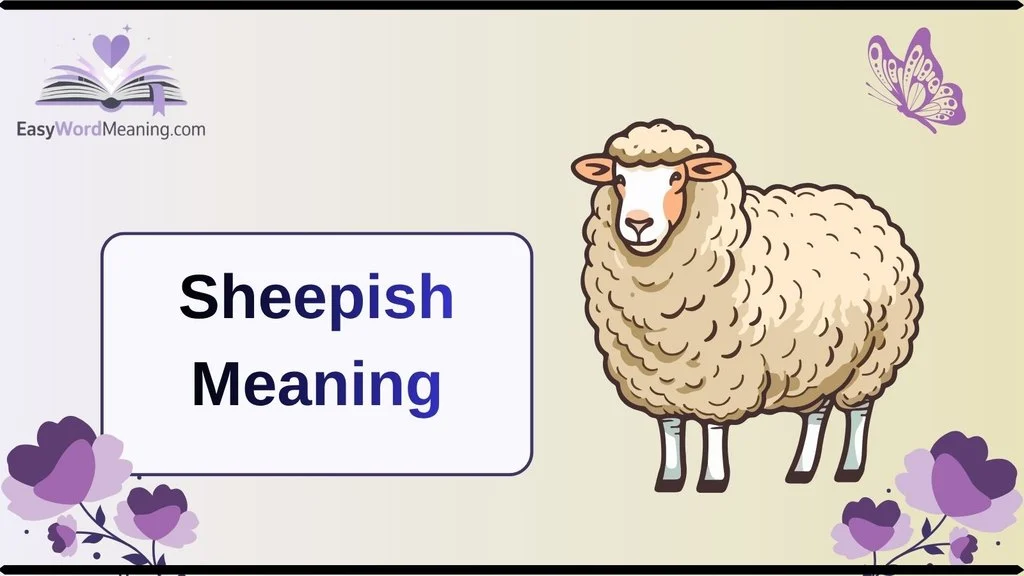
The word sheepish comes from the English word sheep. It developed from the idea of a sheep appearing timid, easily startled, or lacking confidence.
Over time, the word began to describe people who seemed shy, awkward, or embarrassed. Its meaning gradually became associated with the way someone behaves when they know they have made a mistake or feel uncomfortable.
Today, sheepish is used in everyday English, books, conversations, workplace communication, social media, and text messages.
Although its origin is connected to sheep, the word does not mean that a person literally looks like an animal. It describes a human emotion or manner.
What Does Sheepish Mean in Texting and Chat?
In texting, sheepish usually describes a moment when someone feels a little embarrassed, awkward, or guilty in a lighthearted way.
Unlike stronger words such as humiliated or ashamed, sheepish often sounds gentle and informal. It can show that someone recognizes their mistake without making the situation seem too serious.
Sheepish in Casual Messages
Friends may use the word when admitting something silly or unexpected.
Example:
Friend 1: Did you seriously forget your wallet again?
Friend 2: Umm… yes. Feeling sheepish right now 😅.
Here, sheepish means the second friend feels embarrassed because they forgot something.
Sheepish After Making a Mistake
The word is especially useful when someone realizes they were wrong.
Example:
A: You said the movie started at 8, but the ticket says 7.
B: Oh, you’re right. I checked the wrong time. I feel sheepish now.
The speaker is acknowledging a mistake in a modest, slightly embarrassed way.
Sheepish in Social Media Comments
On platforms such as Instagram, Facebook, TikTok, and Reddit, someone might use sheepish in a caption or comment after sharing an awkward experience.
Examples include:
- “When you wave back at someone who wasn’t waving at you. Sheepish 😅.”
- “I thought today was Friday. Feeling sheepish.”
- “Me pretending I knew the answer all along… sheepish behavior.”
- “A sheepish little smile after getting caught stealing the last slice of pizza.”
These examples show how the word can add humor and personality to online conversations.
How to Use Sheepish Correctly in Texts and Chats
Using sheepish correctly is easy once you understand the feeling it describes. It usually works as an adjective before a noun or after linking verbs such as feel, look, and seem.
1. Use Sheepish to Describe a Person
You can use the word to describe someone who appears embarrassed or shy.
Examples:
- “He looked sheepish after breaking the vase.”
- “She gave me a sheepish smile.”
- “My brother had a sheepish expression when Mom found the missing cookies.”
In these sentences, sheepish describes how someone looks or behaves.
2. Use Sheepish to Describe Your Own Feelings
You can also use the word when talking about yourself.
Examples:
- “I feel sheepish about forgetting your name.”
- “I’m a little sheepish after that awkward introduction.”
- “I was feeling sheepish because I sent the message to the wrong group chat.”
This use is natural in both spoken English and texting.
3. Use Sheepish in a Playful Way
Sheepish doesn’t always indicate serious embarrassment. It can describe a funny, harmless, or relatable moment.
Example:
Friend 1: Who ate all the chocolate?
*Friend 2: Not me…
Friend 1: You have chocolate on your face.
Friend 2: Okay, fine. Sheepish grin 🍫.
The word makes the scene feel humorous rather than dramatic.
4. Use Sheepish With Expressions and Gestures
Some common phrases include:
- A sheepish smile: An embarrassed or awkward smile.
- A sheepish grin: A slightly guilty or shy smile.
- A sheepish look: An expression showing embarrassment.
- A sheepish expression: A face that suggests someone feels awkward or sorry.
- A sheepish apology: An apology delivered with embarrassment or modesty.
For example:
“He gave a sheepish grin after admitting he had eaten the last piece of cake.”
5. Use Sheepish in Short Text Messages
In casual chat, you don’t need a long sentence. You can simply say:
- “Feeling sheepish 😅.”
- “That was sheepish of me.”
- “Oops, sheepish moment.”
- “A little sheepish right now.”
- “My bad… looking sheepish.”
These expressions are understandable, but “I feel sheepish” or “I look sheepish” is generally more natural and grammatically complete.
Sheepish Meaning in Different Contexts
The meaning of sheepish stays relatively consistent, but the situation can change the tone.
Sheepish in Friendships
Among friends, sheepish often describes a harmless mistake or an awkward moment.
Example:
“I told everyone I had finished the homework, but I hadn’t even opened the book. Now I’m feeling sheepish.”
The speaker is embarrassed but may be joking about the situation.
Sheepish in School or College
Students might use the word when they forget an assignment, answer a question incorrectly, or arrive late.
Example:
“When the teacher asked for my project, I gave a sheepish smile and admitted I left it at home.”
Here, sheepish suggests mild embarrassment.
Sheepish in the Workplace
The word can also be used in professional settings, although it is more conversational than formal.
Example:
“After sending the wrong attachment to the client, I had to write a sheepish apology.”
It conveys that the writer feels awkward and recognizes the mistake.
In a highly formal email, words such as apologetic or embarrassed may be more appropriate, depending on the situation.
Sheepish on Social Media
Social media users may use sheepish to make an embarrassing story sound relatable or funny.
Example caption:
“Spent ten minutes looking for my phone while holding it in my hand. Feeling sheepish. 📱😅”
The word fits well with humorous posts, self-deprecating jokes, and everyday mishaps.
Sheepish in Online Forums
In discussion forums, users may describe their reaction after being corrected or discovering that they misunderstood something.
Example:
“Thanks for pointing that out. I had the dates completely backward. I feel a bit sheepish now.”
This communicates that the person accepts the correction without becoming defensive.
Examples of Sheepish in Conversations
The following examples show how sheepish might appear in realistic conversations and online chats.
Example 1: Forgetting a Birthday
Friend 1: You forgot my birthday!
Friend 2: I know, and I feel terrible. I have a very sheepish apology to make.
Meaning: The second friend feels embarrassed and sorry about forgetting the birthday.
Example 2: Sending a Message to the Wrong Person
A: Why did you send me that message about your surprise party?
B: Oh no! That was meant for my sister. I feel so sheepish right now. 😅
Meaning: The sender is embarrassed because they made a messaging mistake.
Example 3: Getting Caught Eating Snacks
Mom: Who finished the cookies?
Son: I don’t know…
Mom: There are crumbs all over your shirt.
Son: Gives a sheepish grin.
Meaning: The son looks slightly guilty and embarrassed.
Example 4: Arriving Late
Friend 1: We’ve been waiting for you for twenty minutes!
Friend 2: Sorry! I read the meeting time incorrectly. I walked in with a sheepish smile.
Meaning: The late friend feels awkward about keeping others waiting.
Example 5: A Funny Social Media Caption
“I confidently explained the rules of the game, then realized I had misunderstood everything. Sheepish era 😭.”
Meaning: The person is joking about feeling embarrassed after realizing they were wrong.
Example 6: Receiving an Unexpected Compliment
A: Your presentation was amazing!
B: Really? I was so nervous. Looks sheepish.
Meaning: The person feels shy or self-conscious after receiving praise.
Example 7: Admitting a Small Mistake
Friend 1: You said you didn’t eat the last slice of pizza.
Friend 2: I may have changed my mind. Feeling sheepish now. 🍕
Meaning: The speaker is playfully admitting that they ate the pizza.
Example 8: Being Corrected Online
User 1: The event is actually on Saturday, not Sunday.
User 2: Oh, you’re right! I read the announcement wrong. Sheepish over here.
Meaning: The second user acknowledges their error with mild embarrassment.
Example 9: Forgetting an Important Item
A: Did you bring the umbrella?
B: I remembered my headphones, charger, and snacks—but not the umbrella. Very sheepish of me.
Meaning: The person feels a little silly for forgetting something useful.
Example 10: A Lighthearted Apology
Friend 1: You promised to send me that photo yesterday.
Friend 2: I completely forgot. Here’s a sheepish apology and the photo!
Meaning: The apology is sincere but delivered in a casual, slightly embarrassed tone.
Sheepish vs. Similar Words
Several English words are related to sheepish, but they do not all have exactly the same meaning. Understanding the differences can help you choose the right word in a conversation.
Sheepish vs. Shy
Shy usually describes someone who feels nervous, uncomfortable, or reserved around other people.
Sheepish usually describes someone who feels embarrassed or awkward because of something they have done or said.
Examples:
- “She is shy around new people.”
This describes her general personality or behavior. - “She looked sheepish after forgetting his name.”
This describes her reaction to a particular situation.
A shy person may be shy even when nothing embarrassing has happened. A sheepish person usually has a specific reason for feeling awkward.
Sheepish vs. Embarrassed
Embarrassed is the broader and more common word. It can describe many situations in which someone feels uncomfortable because of attention, a mistake, or an awkward event.
Sheepish often suggests a milder, more modest, or slightly humorous kind of embarrassment.
Example:
- “I was embarrassed when everyone noticed my mistake.”
- “I gave a sheepish smile after realizing my mistake.”
Both sentences express discomfort, but sheepish often paints a gentler picture of the person’s reaction.
Sheepish vs. Ashamed
Ashamed usually suggests a stronger feeling of guilt, regret, or disapproval of one’s own actions.
Sheepish is generally softer and may involve only a small mistake or awkward moment.
Examples:
- “He felt ashamed of hurting his friend.”
- “He felt sheepish after forgetting to call his friend.”
The first sentence suggests a more serious emotional response. The second suggests mild embarrassment.
Sheepish vs. Awkward
Awkward can describe a person, situation, conversation, or behavior that feels uncomfortable or difficult to handle.
Sheepish specifically describes a person’s embarrassed or self-conscious manner.
Examples:
- “The conversation became awkward after nobody answered.”
- “He gave a sheepish smile after making the conversation awkward.”
The words can overlap, but they focus on different aspects of the situation.
Sheepish vs. Guilty
Guilty can refer to responsibility for wrongdoing or the feeling of having done something wrong.
Sheepish often describes the outward appearance of someone who knows they have made a minor mistake.
Example:
“She looked sheepish after taking the last cookie without asking.”
The person might feel guilty, but sheepish emphasizes how she looks or behaves.
Common Mistakes and Misunderstandings About Sheepish
Although sheepish is easy to understand, learners sometimes use it in ways that change its meaning or make a sentence sound unnatural.
Mistake 1: Thinking Sheepish Means Happy
Sheepish does not mean happy, excited, or cheerful.
A person might smile while feeling sheepish, but the smile usually comes from embarrassment or awkwardness.
Incorrect interpretation: “He looked sheepish because he was very happy.”
Better interpretation: “He looked sheepish because he had made a silly mistake.”
Mistake 2: Assuming It Always Means Serious Shame
The word does not necessarily indicate deep guilt or serious wrongdoing. It often refers to small, everyday mistakes.
For example:
- Forgetting your friend’s name.
- Eating the last cookie.
- Sending a message to the wrong chat.
- Arriving late.
- Being corrected about a simple fact.
These situations can all make someone feel sheepish without being particularly serious.
Mistake 3: Using Sheepish as a Noun
Sheepish is an adjective, not a noun.
Incorrect: “He is a sheepish.”
Correct: “He is sheepish.”
You can also say:
- “He has a sheepish expression.”
- “She gave a sheepish grin.”
- “I felt sheepish after the mistake.”
Mistake 4: Confusing Sheepish With Sheep
Sheep is the name of an animal. Sheepish is an adjective describing a person’s behavior or feelings.
Example:
- “The sheep are grazing in the field.”
- “The boy looked sheepish after breaking the toy.”
The two words are related in origin, but they have different grammatical functions and meanings.
Mistake 5: Using Sheepish for Every Kind of Nervousness
Not every nervous person is sheepish.
Someone might feel nervous before an exam, a speech, or a competition without having done anything embarrassing. In those cases, anxious, nervous, or worried may be more accurate.
Use sheepish when the nervousness or awkwardness is connected to embarrassment, self-consciousness, or a mistake.
Mistake 6: Assuming Sheepish Is Always Negative
The word can be used affectionately or humorously. Friends and family often use it to describe someone who made a harmless mistake.
For example:
“My little brother gave me a sheepish smile after eating the cake I had saved.”
This sentence may sound playful rather than critical.
Related Words, Slang, and Expressions
Since sheepish is not a texting abbreviation, it is helpful to compare it with related vocabulary and expressions commonly used in digital conversations.
1. Oops
Oops is a casual expression used after making a small mistake.
Example:
“Oops, I sent that to the wrong person.”
It is often used with sheepish:
“Oops… feeling sheepish now 😅.”
2. My Bad
My bad is an informal way to admit responsibility for a mistake.
Example:
“My bad, I forgot to reply.”
A person might feel sheepish while saying it.
3. Awkward
Awkward describes an uncomfortable or embarrassing situation.
Example:
“That was an awkward moment.”
A sheepish reaction can happen during an awkward moment.
4. Embarrassed
Embarrassed means feeling uncomfortable or self-conscious because of something that happened.
Example:
“I was embarrassed when I called my teacher by the wrong name.”
This is one of the closest everyday synonyms of sheepish.
5. Facepalm
Facepalm is an informal expression or reaction associated with frustration, disbelief, or embarrassment over a mistake.
Example:
“I forgot the meeting was today. Facepalm 🤦.”
Someone might also feel sheepish in the same situation.
6. SMH
SMH stands for “shaking my head.” It is commonly used online to express disbelief, disappointment, or frustration.
Example:
“Forgot my own phone number. SMH.”
The person might also say, “I’m feeling sheepish,” but the two expressions are not synonyms.
7. Cringe
Cringe is often used online to describe something embarrassing, awkward, or uncomfortable to watch.
Example:
“That old post was so cringe.”
Sheepish describes the embarrassed person, while cringe often describes the situation, content, or reaction.
8. Awkward Smile
An awkward smile is a facial expression that can show discomfort, uncertainty, or embarrassment.
Example:
“I gave an awkward smile when everyone looked at me.”
A sheepish smile is a related phrase, especially when the person knows they have made a mistake.
When Should You Use Sheepish in a Text?
Use sheepish when you want to communicate a mild sense of embarrassment in a natural, often humorous way.
It works especially well when:
- You made a small mistake.
- You forgot something important.
- You were caught doing something silly.
- You misunderstood a message or situation.
- You want to apologize casually.
- You feel shy after receiving unexpected attention.
- You are describing someone else’s embarrassed expression.
Quick Guide to Using Sheepish
| Situation | Natural text |
|---|---|
| You forgot a friend’s birthday | “I feel sheepish for forgetting.” |
| You sent the wrong message | “Oops, that was sheepish of me 😅.” |
| You ate the last cookie | “Caught red-handed. Sheepish grin.” |
| You were corrected | “Oh, my mistake. Feeling sheepish now.” |
| You arrived late | “Sorry I’m late. I have a sheepish apology.” |
| You received a compliment | “Aww, now I’m feeling sheepish.” |
Remember that sheepish is generally informal and expressive. It is ideal for casual messages, captions, and friendly conversations, but a more direct word may be better in serious or formal situations.
Fun and Relatable Sheepish Texting Scenarios
Modern texting often involves quick mistakes, unexpected replies, and awkward moments. Here are a few relatable examples.
The Wrong Chat Problem
You meant to send a funny comment to your best friend, but you accidentally sent it to your class group.
Text: “I have entered my sheepish era. Wrong chat. 😭”
This is a playful way to describe embarrassment.
The Forgotten Reply
Your friend says:
“Did you see my message from yesterday?”
You reply:
“Oh no, I did! I just forgot to answer. Feeling sheepish now.”
The word softens the admission and makes it sound more conversational.
The Accidental Like
You accidentally like an old social media post while browsing someone’s profile.
Caption: “When you accidentally like a post from 2019… sheepish behavior activated. 🫣”
This is a humorous use of the word in online culture.
The Confidently Wrong Answer
You confidently explain something, only to discover that your friend was correct.
Text: “I owe you an apology. I was completely wrong. Very sheepish of me.”
It shows that you can accept a correction without taking yourself too seriously.
FAQs:
What is the simple meaning of sheepish?
Sheepish means feeling or looking embarrassed, shy, awkward, or slightly guilty, usually after making a mistake or doing something silly.
Is sheepish a slang word?
No. Sheepish is a standard English adjective, not slang or an abbreviation. However, it is commonly used casually in texts, social media captions, and online conversations.
What does “I feel sheepish” mean in a text?
“I feel sheepish” means “I feel a little embarrassed or awkward about something I did or said.” It often suggests a mild, sometimes humorous embarrassment.
What is a sheepish smile?
A sheepish smile is an awkward, shy, or slightly embarrassed smile. Someone may make this expression after being corrected, caught making a mistake, or receiving unexpected attention.
Is sheepish a positive or negative word?
Sheepish is usually neutral or mildly negative because it describes embarrassment or awkwardness. However, it can sound playful, gentle, or affectionate depending on the context.
What is the difference between sheepish and shy?
Shy often describes a person’s general tendency to feel nervous or reserved around others. Sheepish usually describes a specific moment of embarrassment or awkwardness.
Can I use sheepish in a social media caption?
Yes. Sheepish works well in humorous captions about small mistakes, awkward moments, or playful admissions.
Example: “Forgot why I walked into the room. Feeling sheepish 😅.”
Is sheepish the same as ashamed?
Not exactly. Ashamed usually suggests stronger guilt or regret, while sheepish often describes mild embarrassment or an awkward reaction to a small mistake.
Can sheepish describe a person who is happy?
Not directly. Sheepish describes embarrassment or self-consciousness, although someone may smile or laugh while feeling sheepish.
What are the synonyms of sheepish?
Common synonyms include embarrassed, shy, self-conscious, awkward, apologetic, bashful, and abashed. The best choice depends on the situation and the intensity of the feeling.
Conclusion:
The sheepish meaning is simple: it describes someone who feels or looks embarrassed, shy, awkward, or slightly guilty, often after making a small mistake or doing something silly
It is a standard English adjective rather than a texting abbreviation, but it fits naturally into casual messages, online comments, social media captions, and everyday conversations.
Whether you are admitting that you forgot something, reacting to a funny mistake, or describing someone’s awkward smile, sheepish adds a gentle and relatable tone.
Phrases such as “I feel sheepish,” “a sheepish grin,” and “feeling sheepish now 😅” are useful ways to express mild embarrassment without making the situation sound too serious.
Now that you know what sheepish means, you can recognize it more easily in texts and use it confidently in your own conversations.
Share your favorite text abbreviation or funny vocabulary moment in the comments!

Suleman Malik is the voice behind EasyWord Meaning, bringing clarity to words one meaning at a time. Passionate about language and learning, he makes understanding words simple, fun, and memorable for everyone.