In today’s fast-moving digital world, words travel faster than facts. One moment you’re scrolling through comments, the next you see someone say, “That claim was refuted.”
Suddenly, you pause and think: what does refute actually mean in texting or online chats?
Understanding the refute meaning is more important than ever—especially in 2026, when online debates, viral screenshots, and misinformation spread in seconds.
Whether you’re chatting on WhatsApp, arguing on X (Twitter), commenting on Reddit, or replying to a heated group chat, knowing how and when to use refute can make you sound smarter, clearer, and more credible.
This guide breaks it all down in simple, human language, with real chat-style examples, modern usage, and practical tips—no dictionary headache required.
What Does “Refute” Mean? (Definition & Origin)
Simple Definition of Refute
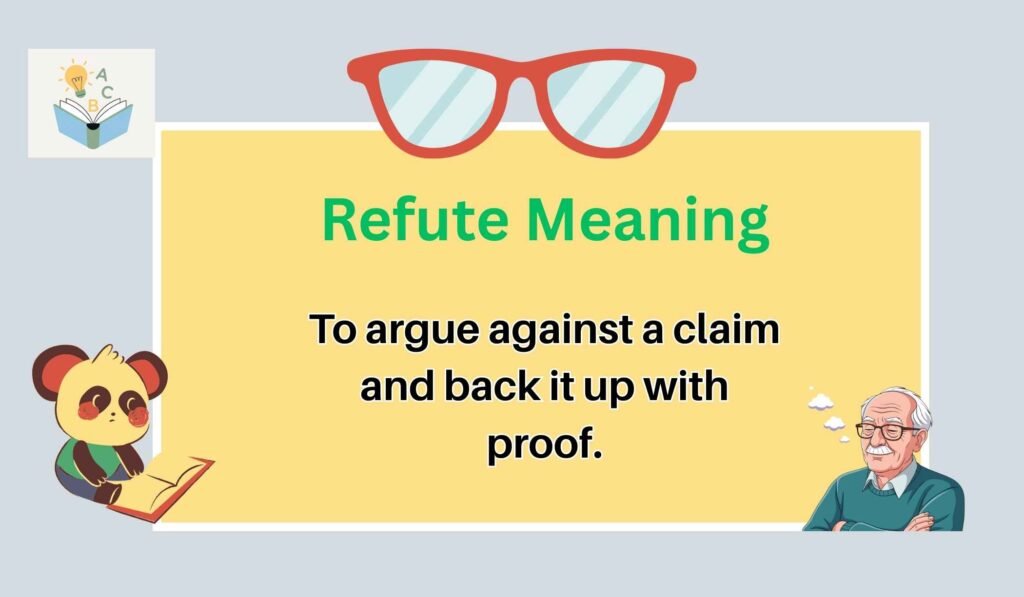
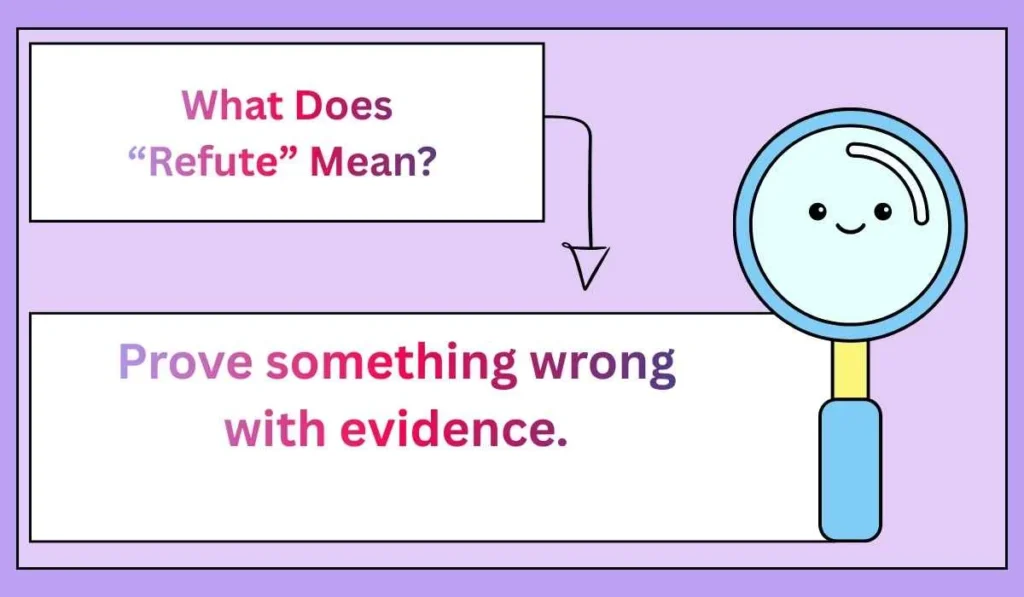
Refute means to prove that something is false using facts, logic, or evidence.
👉 In plain words:
When you refute something, you don’t just say “you’re wrong” — you show why it’s wrong.
Refute meaning (easy version):
To argue against a claim and back it up with proof.
Refute vs Deny (Important Difference)
This is where many people get confused 👇
- Deny = Say it’s not true (no proof required)
- Refute = Prove it’s not true (proof required)
Example:
- ❌ “I deny your claim.” (just words)
- ✅ “I refute your claim with screenshots.” (words + evidence)
That’s why refute is often used in debates, news, academic discussions, and now—online arguments and chats.
Origin of the Word “Refute”
The word refute comes from the Latin word refutare, meaning:
to drive back, rebut, or prove wrong
Over time, it moved from formal writing into everyday English—and now into digital conversations, comments, and captions.
How to Use “Refute” in Texts or Chat
You might think refute sounds too formal for texting—but in 2026, it’s surprisingly common, especially in:
- Online debates
- Reddit threads
- Twitter/X replies
- Group chats with “fact-checker” friends 😅
- Academic or professional chats (Slack, Discord)
When Should You Use “Refute”?
Use refute when:
- Someone shares false information
- You have proof, facts, or logic
- You want to sound clear, confident, and factual
Casual Chat-Friendly Ways to Use Refute
You don’t always need to sound stiff. Here are modern, natural ways people use it in chats:
- “That rumor was refuted already.”
- “Bro, that’s been refuted with actual data.”
- “I can refute that claim easily.”
- “The video literally refutes what he said.”
💡 Pro tip: Pair refute with words like facts, proof, screenshots, data, or receipts for a modern vibe.
Examples of “Refute” in Real Conversations
Let’s make this relatable 👇
Example 1: Group Chat Drama
Ali: “I heard the exam got canceled.”
Sara: “Nope, that’s false.”
Usman: “Yeah, the university refuted that rumor on their official page.”
✔ Correct use.
✔ Sounds informed.
✔ Ends confusion.
Example 2: Social Media Argument
Commenter: “This app steals all your data.”
Reply: “That claim has been refuted by multiple security reports.”
🔥 Calm.
🔥 Confident.
🔥 Credible.
Example 3: Funny Casual Text
Friend 1: “You never replied to my text 😤”
Friend 2: “I refute that accusation with screenshots 😂”
➡️ This is how refute is often used humorously now.
Example 4: Academic / Professional Chat
Colleague: “This method doesn’t work.”
You: “The latest study actually refutes that assumption.”
✔ Professional
✔ Clear
✔ Evidence-based
Common Mistakes or Misunderstandings
Even smart people misuse refute, so let’s clear things up.
❌ Mistake 1: Using Refute Without Proof
Wrong:
“I refute your opinion.”
Why it’s wrong:
An opinion can’t always be refuted unless it’s based on false facts.
Better:
“I disagree with your opinion.”
❌ Mistake 2: Confusing Refute with Reject
- Reject = Say no / refuse
- Refute = Prove wrong
Wrong:
“I refute your offer.”
Correct:
“I reject your offer.”
❌ Mistake 3: Using It for Emotions
Wrong:
“I refute that I feel sad.”
Feelings aren’t facts.
Use refute only for claims, statements, or accusations.
Refute Meaning in Online Debates & Internet Culture
In 2026, refute has become a power word in digital spaces.
You’ll often see it in phrases like:
- “Facts refute this narrative”
- “Receipts refute the allegations”
- “This thread refutes the viral claim”
- “Science refutes the myth”
It’s commonly used in:
- Fact-check posts
- Reaction videos
- Commentary channels
- Long Twitter/X threads
- Reddit explanations
Using refute correctly instantly boosts your credibility online.
Related Slangs & Abbreviations (Similar Meanings)
If you want alternatives depending on tone, here you go 👇
Formal / Smart Alternatives
- Disprove
- Debunk
- Invalidate
- Rebut
Casual / Internet-Style Alternatives
- Call cap 🧢
- Receipts say otherwise
- That’s been debunked
- Fact-check says no
Gen Z / Online Slang Versions
- “That’s cap, and it’s been refuted.”
- “Receipts refute this hard.”
- “Bro got refuted in 4 screenshots.”
How to Use “Refute” Correctly (Quick Guide)
Use refute when all three apply:
✅ There’s a clear claim
✅ You have evidence or logic
✅ You want to sound credible
Avoid using it when:
- You’re just expressing feelings
- You don’t have proof
- You mean reject or disagree
FAQs:
Does refute always need proof?
Yes. Without proof, you’re just denying or disagreeing—not refuting.
Is refute a negative word?
Not negative, but strong. It challenges a claim directly.
Can refute be used casually?
Yes! Especially with humor or screenshots in chats.
Is refute used in slang?
It’s not slang itself, but it’s widely used in internet culture.
Can I refute an opinion?
Only if the opinion is based on false facts.
Final Thoughts:
To sum it up, the refute meaning is simple but powerful. It’s not about arguing loudly—it’s about arguing smartly. In texts, chats, and online debates, using refute correctly shows that you rely on facts, not just feelings.
As online conversations continue to evolve in 2026, words like refute help cut through noise, misinformation, and drama.
When used right, it adds clarity, authority, and confidence to your messages.

Suleman Malik is the voice behind EasyWord Meaning, bringing clarity to words one meaning at a time. Passionate about language and learning, he makes understanding words simple, fun, and memorable for everyone.