Understanding ops baseball meaning isn’t just for hardcore stat nerds anymore ⚾📊. You’ll see “OPS” everywhere—sports Twitter (X), Reddit threads, fantasy baseball chats, group texts, and even memes.
If you’ve ever wondered what OPS actually means, why people use it in casual chats, or how to use it correctly without sounding confused, this guide is for you.
This article is updated for 2026, written in simple language, and designed to help both beginners and everyday sports fans understand OPS clearly and confidently.
What Does “ops baseball meaning” Mean? ⚾
Definition, Breakdown & Origin
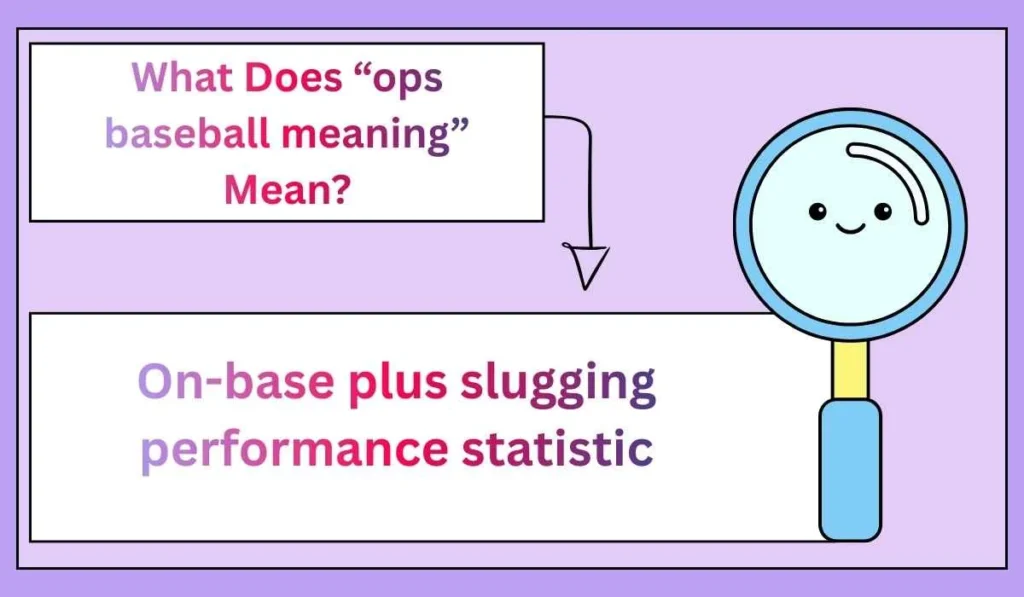
At its core, OPS is a baseball statistic. OPS stands for:
On-base Plus Slugging
In simple terms, OPS measures how good a hitter is overall—not just at getting hits, but at getting on base and hitting with power.
The Simple Formula 📊
OPS is calculated like this:
- OPS = OBP + SLG
Where:
- OBP (On-Base Percentage) = how often a player gets on base
- SLG (Slugging Percentage) = how much power a player hits with
Put together, OPS gives a quick snapshot of a player’s offensive value.
Why OPS Became Popular
OPS became widely used because it:
- Combines discipline + power
- Is easy to compare across players
- Works well for quick debates and online discussions
That’s why you’ll see OPS mentioned constantly in:
- Fantasy baseball leagues
- Twitter/X debates
- Reddit r/baseball threads
- Group chats during live games
How to Use “OPS” in Texts or Chat 💬
Modern Chat & Internet Usage
While OPS started as a serious stat, it’s now common internet slang among sports fans. People use it casually to judge performance—sometimes seriously, sometimes jokingly.
Common Chat Contexts
You’ll see OPS used when people are:
- Arguing about MVPs 🏆
- Comparing players across eras
- Trash-talking rival teams 😄
- Flexing fantasy baseball knowledge
Examples of Natural Usage
- “His OPS is over .900—dude is elite.”
- “Stop hating, check his OPS this season.”
- “Low average but unbelievable OPS 👀.”
Examples of “OPS” in Real Conversations 🗨️
Example 1: Group Chat During a Game
Alex: “Why is he batting cleanup?”
Sam: “Bro, his OPS is .950 😭 let him cook.”
*Example 2: Fantasy Baseball Chat
User1: “Thinking of trading him.”
User2: “Don’t. His OPS is trending up big time.”
Example 3: Social Media (X / Twitter)
“People still sleeping on this guy but his OPS says everything 📊⚾”
*Example 4: Funny / Sarcastic Use 😅
“Batting .220 but OPS merchants will still defend him.”
This shows how OPS has evolved from a strict stat into part of modern baseball language.
Why OPS Matters So Much in Baseball Culture 🔥
OPS matters because it answers one big question:
“How dangerous is this hitter?”
What a Good OPS Looks Like (Quick Guide)
- .600 or below → Poor
- .700 → Average
- .800 → Very good
- .900+ → Elite
- 1.000+ → MVP-level 💎
Fans love OPS because:
- It’s quick
- It’s comparative
- It feels “smart” to reference
That’s why OPS dominates online baseball conversations in 2026.
Common Mistakes or Misunderstandings ❌
Even though OPS is popular, it’s often misunderstood. Here are the most common mistakes:
1. Thinking OPS Is Everything
OPS is useful, but it’s not perfect. It doesn’t account for:
- Defense
- Base running
- Park factors
That’s why advanced fans also mention OPS+, which adjusts for league and stadium.
2. Confusing OPS With Batting Average
- Batting average = hits only
- OPS = on-base skills + power
A player can hit .240 and still have a great OPS.
3. Using OPS Outside Baseball Context
OPS is baseball-specific. Using it for other sports usually sounds wrong unless you’re joking.
OPS vs OPS+ (Quick Comparison) 📈
OPS
- Raw stat
- Easy to read
- Great for casual chats
* OPS+
- Adjusted for league and ballpark
- 100 = league average
- More accurate for deep analysis
Chat tip:
Use OPS for quick takes.
Use OPS+ when you want to sound extra informed 😎.
Related Slangs or Baseball Abbreviations ⚾🧠
If you understand OPS, you’ll often see these too:
- OBP – On-base percentage
- SLG – Slugging percentage
- WAR – Wins Above Replacement
- ERA – Earned Run Average (pitchers)
- wRC+ – Weighted Runs Created Plus
- ISO – Isolated Power
👉 Internal linking tip: Consider linking this article to detailed guides on WAR meaning, OPS+ explained, or wRC+ slang usage.
How to Use OPS Correctly Without Sounding Confusing ✅
Do This ✔️
- Use OPS when comparing hitters
- Mention numbers if possible
- Use it in baseball-specific chats
Avoid This ❌
- Saying OPS explains defense
- Using it without context
- Mixing it up with pitching stats
Safe Chat Formula
“His OPS is around .850 this season—solid bat.”
This sounds natural, informed, and clear.
Why OPS Is Still Trending in 2026 🚀
OPS remains popular because:
- Fantasy baseball is bigger than ever
- Sports betting discussions rely on quick stats
- Social media favors short, powerful metrics
Even casual fans now understand OPS at a basic level, making it a must-know baseball term.
Final Thoughts:
To sum it up, ops baseball meaning refers to a simple but powerful stat that combines a player’s ability to get on base and hit for power.
What started as an analytics tool has become everyday baseball language used in chats, tweets, memes, and debates.
If you want to talk baseball confidently in 2026—whether you’re in a fantasy league, watching a live game, or scrolling social media—understanding OPS gives you an instant edge.
Now that you know how OPS works and how fans actually use it online, you’re ready to join the conversation without hesitation 💬⚾.

Hi, I’m Musaghumman, the mind behind EasyWordMeaning. I turn confusing words into easy meanings so anyone can learn, understand, and use English with confidence.