In today’s fast-moving digital world, words travel faster than ever. A single term can jump from history books to memes, group chats, and comment sections overnight.
One such word is harakiri.
You might have seen it used dramatically in tweets, jokingly in WhatsApp chats, or even sarcastically in Reddit threads.
So what does harakiri actually mean in modern usage? And why are people still using a centuries-old word in 2026 texting culture?
Let’s break down the harakiri meaning, its origin, and how it’s used today—without confusion, stereotypes, or awkward mistakes.
What Does Harakiri Mean? (Definition & Origin)
The Original Meaning of Harakiri
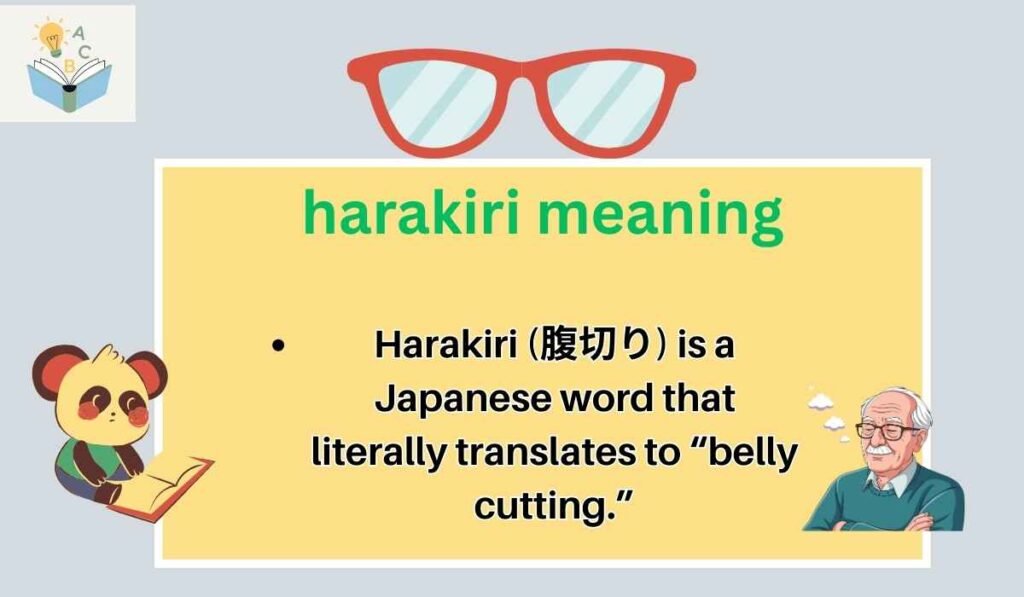
Harakiri (腹切り) is a Japanese word that literally translates to “belly cutting.” Historically, it refers to a ritual form of suicide practiced by samurai in feudal Japan.
In traditional Japanese culture, harakiri—also known as seppuku—was performed to:
- Restore honor after failure
- Avoid capture by enemies
- Take responsibility for serious mistakes
How Harakiri Entered English & Global Culture
Over time, harakiri entered English and other languages through:
- History books 📚
- War documentaries
- Movies and TV shows 🎬
- News headlines and opinion pieces
Eventually, it evolved into a metaphorical expression in modern English.
Modern Harakiri Meaning (In Simple Terms)
In modern text, chat, and online slang, harakiri usually means:
Doing something that completely ruins yourself, your career, reputation, or chances—often knowingly.
It is almost always figurative, not literal.
In short:
👉 “Self-destruction by your own actions.”
How to Use Harakiri in Texts or Chat
In 2026, people use harakiri more for dramatic effect, sarcasm, or exaggeration than historical accuracy.
Common Contexts Where Harakiri Is Used
You’ll usually see it in:
- Twitter/X posts
- Reddit discussions
- Group chats
- Online forums
- Comment sections
- Political or sports debates
Typical Tone of Usage
The tone is often:
- 😅 Sarcastic
- 😬 Self-critical
- 😮 Dramatic
- 🤦 Regretful
How People Use It in Sentences
Here’s how harakiri fits naturally into modern chats:
- “Posting that tweet was social media harakiri.”
- “He basically committed career harakiri with that interview.”
- “I pulled academic harakiri by skipping the final exam.”
- “That update was product harakiri for the brand.”
Notice something important?
✅ It’s almost always paired with career, social, political, or emotional consequences.
Examples of Harakiri in Real Conversations
Let’s look at realistic, 2026-style chat examples so you can recognize and use it correctly.
Example 1: Social Media Context
User A: Why did the influencer delete all their old posts?
User B: Probably damage control. That apology video was influencer harakiri.
➡️ Meaning: They ruined their own online reputation.
Example 2: Workplace Chat
Colleague 1: He criticized the CEO in a public meeting.
Colleague 2: Yeah… that was professional harakiri.
➡️ Meaning: A self-destructive career move.
Example 3: Student Life
Student: I forgot to submit the project worth 40%.
Friend: Bro, that’s academic harakiri.
➡️ Meaning: A mistake that severely hurts academic success.
Example 4: Sports Commentary
Fan: The coach benched their best player in the final.
Reply: Tactical harakiri, honestly.
➡️ Meaning: A decision that caused defeat.
Common Mistakes or Misunderstandings
Because harakiri has a serious historical background, it’s often misunderstood or misused.
❌ Mistake 1: Taking It Literally
Some people think modern usage refers to actual suicide.
➡️ In online slang, it almost never does.
❌ Mistake 2: Using It Casually in Sensitive Situations
Avoid using harakiri when discussing:
- Mental health issues
- Real self-harm topics
- Serious tragedies
In those contexts, it can sound insensitive or offensive.
❌ Mistake 3: Confusing Harakiri with Seppuku
- Seppuku → formal, historical, respectful
- Harakiri → informal, blunt, metaphorical in English
In chats and memes, harakiri is used far more often.
❌ Mistake 4: Overusing It
Using it too frequently can make your message:
- Sound exaggerated
- Lose impact
- Feel dramatic without reason
Use it sparingly for emphasis.
How to Use Harakiri Correctly (Practical Guide)
If you want to use harakiri naturally in modern text or chat, follow these tips.
Best Practices
✔ Use it metaphorically
✔ Pair it with career, reputation, strategy, or decision
✔ Use it in informal or semi-formal settings
✔ Keep the tone exaggerated or ironic
Quick Formula for Correct Usage
[Type of action] + harakiri
Examples:
- Career harakiri
- Political harakiri
- Brand harakiri
- Social media harakiri
Related Slangs or Abbreviations (Similar Meanings)
If harakiri feels too dramatic or outdated, here are modern alternatives with similar meanings.
Popular Alternatives in 2026
- Self-sabotage – Neutral and widely accepted
- Career suicide – Very common in professional talk
- Shot yourself in the foot – Idiomatic and casual
- Pulled an L – Gen Z slang for a big mistake
- Fumbled hard – Internet-friendly and trendy
- Epic fail – Still relevant and light-hearted
Why Is Harakiri Still Used in 2026?
Despite being an old word, harakiri survives because it’s:
- Visually dramatic
- Easy to understand metaphorically
- Emotionally expressive
- Useful for strong opinions
Cultural Awareness: A Quick Reminder
While harakiri is common in English slang, it’s rooted in Japanese history and honor culture.
Using it respectfully means:
- Avoid joking about real death
- Stick to metaphorical usage
- Be mindful of your audience
Variations of Harakiri Meaning
You may see people searching for:
- harakiri meaning in text
- harakiri slang meaning
- what does harakiri mean online
- harakiri meaning in chat
- harakiri metaphor meaning
Conclusion:
To sum it up, harakiri no longer lives only in history books.
In modern texting and online conversations, it’s a powerful metaphor for actions that destroy your own success, reputation, or chances—often dramatically and publicly.
Used correctly, it adds emphasis, emotion, and clarity to your message. Used carelessly, it can sound insensitive or exaggerated. Context is everything.
Updated for 2026, this term remains relevant because people still make bold mistakes—and language evolves to describe them.

Suleman Malik is the voice behind EasyWord Meaning, bringing clarity to words one meaning at a time. Passionate about language and learning, he makes understanding words simple, fun, and memorable for everyone.