If you’ve recently come across the word “alopecia” in chats, social media, or even casual conversations, you’re not alone.
In today’s fast-moving digital world, understanding terms like this is important—not just for staying updated but also for communicating clearly and respectfully.
Unlike typical slang or abbreviations, alopecia is actually a real medical term that sometimes appears in online discussions, memes, or serious conversations.
Knowing its meaning helps you avoid misunderstandings and use it correctly in modern communication.
Let’s break it down in the simplest way possible 👇
What Does “Alopecia” Mean? (Definition & Origin)
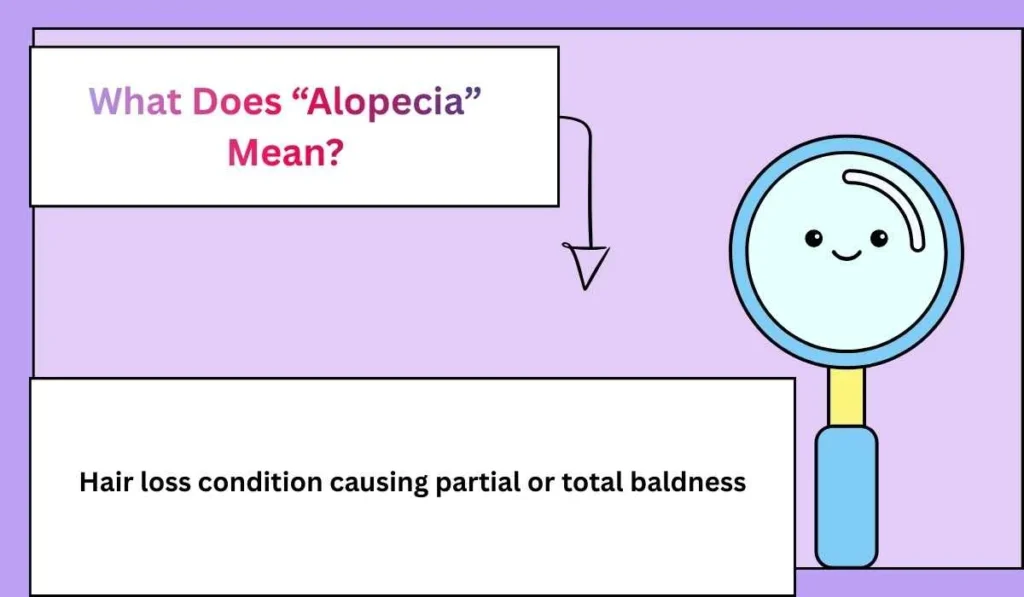
The term “alopecia” genders to hair loss. It is a medical condition where a person loses hair from the scalp or other parts of the body.
👉 The correct definition:
- Alopecia = Hair loss (temporary or permanent)
This condition is medically known as Alopecia and can happen for different reasons such as genetics, stress, illness, or autoimmune disorders.
📚 Origin of the Word
- Comes from the Greek word “alopex” meaning fox 🦊
- Foxes were associated with hair loss (mange), which is why the term evolved this way
🔍 Types of Alopecia
Here are some common forms you might see mentioned online:
- Alopecia Areata – Patchy hair loss
- Androgenetic Alopecia – Pattern baldness (common in men & women)
- Alopecia Totalis – Loss of all scalp hair
- Alopecia Universalis – Loss of all body hair
💡 Important: This is not slang—it’s a real condition, but it may appear in chats casually.
How to Use “Alopecia” in Texts or Chat 💬
Even though alopecia is a medical term, people sometimes use it in everyday conversations, especially online.
✅ Correct Usage
You can use it in:
- Informational chats
- Health discussions
- Awareness posts
- Supportive conversations
📱 Examples of Usage:
- “I just learned about alopecia, it’s actually more common than I thought.”
- “She’s spreading awareness about alopecia on Instagram ❤️”
- “He’s confident even with alopecia—respect! 💯”
⚠️ Tone Matters
Because alopecia is a real condition, always use it respectfully.
✔ Good:
- Supportive, informative, kind
❌ Avoid:
- Jokes that could hurt someone
- Misusing it as an insult
Examples of “Alopecia” in Conversations 🗣️
Let’s look at some real-life style examples so you fully understand how it’s used:
1. Friendly Chat
Friend 1: Why is he bald at such a young age?
Friend 2: He has alopecia, it’s a condition.
2. Social Media Comment
“Spreading love to everyone dealing with alopecia 💖 Stay strong!”
3. Awareness Post
“Did you know alopecia affects millions worldwide? Let’s normalize it.”
4. Casual Learning Moment
“I thought alopecia was just baldness, but it’s actually more complex 😮”
5. Supportive Conversation
“It’s not easy dealing with alopecia, but confidence matters more 🙌”
Common Mistakes or Misunderstandings ❌
Many people misunderstand alopecia, especially online. Let’s clear that up:
❌ Mistake 1:
Thinking It’s Slang
- It’s NOT slang or a meme word
- It’s a medical condition
*Mistake 2:
Using It as a Joke
- This can be offensive
- Always be respectful
❌ Mistake 3:
Assuming It Only Affects Men
- It affects both men and genders
*Mistake 4:
Confusing It with Normal Hair Fall
- Hair fall ≠ alopecia
- Alopecia is often more severe or specific
❌ Mistake 5:
Believing It’s Always Permanent
- Some types are temporary
- Some are permanent
Related Slangs or Terms 🔗
Even though alopecia itself is not slang, it often appears alongside other words online.
🧠 Related Terms:
- Bald – Simple term for no hair
- Hair loss – General phrase
- Shedding – Mild hair fall
- Glow up – Confidence transformation despite hair loss ✨
- Self-love – Often used in awareness posts 💖
📌 Internal Linking Suggestions (SEO Tip)
If you’re building a blog, link this article with:
- “Glow up meaning”
- “Self-love meaning”
- “No cap meaning”
- “Slay meaning”
Why “Alopecia” Trends Online in 2026 📈
In recent years, awareness about alopecia has grown massively.
🔥 Reasons it’s trending:
- Social media awareness campaigns
- Influencers sharing personal journeys
- Focus on body positivity & self-acceptance
- Viral discussions and real-life stories
People now use the term more openly in chats and posts, making it important to understand.
Personal Insight 💭
From a real-world perspective, the way people talk about alopecia has changed a lot. Earlier, it was misunderstood or ignored. But now, people are:
- More supportive 🤝
- More aware 📚
- More respectful ❤️
Understanding words like this helps you become a better communicator in today’s digital world.
Quick Summary 📝
- Alopecia = Hair loss condition
- It is a medical term, not slang
- Used in serious and supportive conversations
- Always use it respectfully
- Common in social media, chats, and awareness posts
Conclusion: 🎯
Understanding the meaning of alopecia is more important than ever in 2026.
As conversations around health, confidence, and self-acceptance grow online, knowing the correct meaning helps you stay informed and respectful.
Whether you see it in a chat, a post, or a trending topic, you now know exactly what it means and how to use it properly.
That’s the power of clear communication in the digital age 💬✨
👉 Now it’s your turn!
Have you seen this word used online before?
Share your favorite text abbreviation in the comments! 🚀

Suleman Malik is the voice behind EasyWord Meaning, bringing clarity to words one meaning at a time. Passionate about language and learning, he makes understanding words simple, fun, and memorable for everyone.