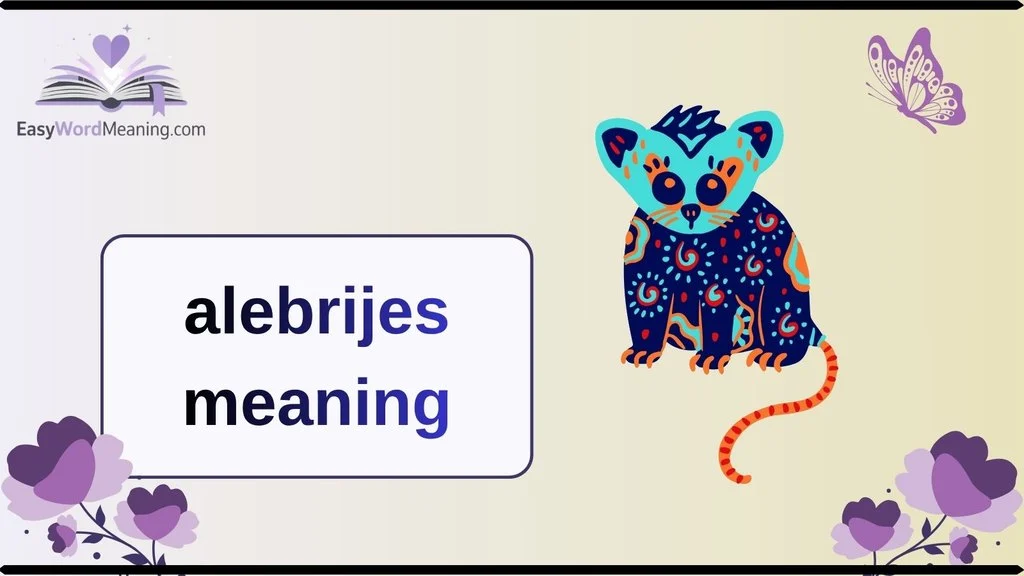
If you’ve seen the word “alebrijes” online, in travel posts, art discussions, movies, or social media, you may have wondered what it means.
Unlike common texting abbreviations such as “LOL” or “BTW,” alebrijes is not a chat abbreviation or internet slang term. It is a Spanish word connected to a distinctive form of Mexican folk art.
Understanding the alebrijes meaning gives you more than a simple dictionary definition. The word refers to fantastical creatures that combine features of different animals and are often decorated with vivid colors and intricate patterns.
The tradition is especially associated with Mexico and, in a different but related artistic tradition, with Oaxaca.
What Does “Alebrijes” Mean?
Alebrijes is the plural form of alebrije, a term used for fantastical Mexican art figures. These imaginative creatures may combine characteristics of several real or imaginary animals into one unusual design.
For example, an alebrije might look like a combination of:
- A bird and a jaguar
- A rabbit and a dragon
- A wolf and an eagle
- A cat with wings
- Several different animals blended into one creature
Mexican cultural sources describe alebrijes as fantastic figures combining elements from different animals, often featuring bright colors and elaborate decoration.
The word can therefore be understood in simple terms as referring to fantastical Mexican creatures or artistic figures, rather than a slang expression.
Is “Alebrijes” an Abbreviation?
No. Alebrijes is not an abbreviation, acronym, or texting shortcut.
If you searched for “alebrijes meaning” because you encountered it in a message, caption, comment, or post, the person was most likely referring to Mexican art or the fantastical creatures themselves.
That distinction matters because not every unfamiliar word found online is internet slang.
What Is the Origin of Alebrijes?
The history of alebrijes is strongly associated with Mexican artist and cartonero Pedro Linares, who is widely credited with creating the original alebrije tradition.
According to the story preserved by Mexico City’s Museo de Arte Popular, Linares experienced a vivid dream while seriously ill. In the dream, he encountered strange creatures and heard the word “alebrijes.” After recovering, he recreated the unusual creatures through cartonería, a traditional Mexican paper-based craft.
This story is one of the most fascinating parts of the alebrijes meaning and origin because the creatures were not simply designed as ordinary animals. They came from an imaginative world of unusual forms and combinations.
Pedro Linares and the Dream Story
The commonly told origin story goes roughly like this:
- Pedro Linares became seriously ill.
- During his illness, he experienced a vivid dream.
- In the dream, he encountered strange, fantastical animals.
- The creatures were associated with the word “alebrijes.”
- After recovering, he began recreating the creatures through cartonería.
- The artistic tradition was subsequently passed through generations.
The Museo de Arte Popular describes Linares as the artisan to whom the creation of alebrijes is attributed.
It is worth remembering that this is a traditional origin story rather than something that should be confused with a modern texting trend.
What Do Alebrijes Look Like?
One reason alebrijes have become so recognizable is their extraordinary visual style.
They are commonly associated with:
- Bright and contrasting colors
- Detailed patterns
- Unusual animal combinations
- Decorative spots, stripes, dots, and geometric designs
- Fantasy-inspired bodies and features
- Handcrafted details
Official Mexican cultural sources describe alebrijes as figures that can combine parts of real or imaginary animals and feature many vibrant colors.
This means an alebrije does not have to represent one specific animal. Its unusual appearance is part of the appeal.
Why Are They So Colorful?
The colors are an important part of the artistic character of many alebrijes. Artisans can use elaborate patterns and multiple colors to make every piece visually distinctive.
In Oaxaca, traditional wooden versions are often carefully carved and painted by hand. Government documentation concerning Oaxacan woodcraft describes alebrijes, tonas, nahuales, and related wood carvings as figures carved from wood and painted with a wide variety of colors and motifs.
So when someone describes something as looking “like an alebrije,” they may be emphasizing that it looks colorful, imaginative, unusual, or fantastical.
Alebrijes and Oaxaca: What’s the Connection?
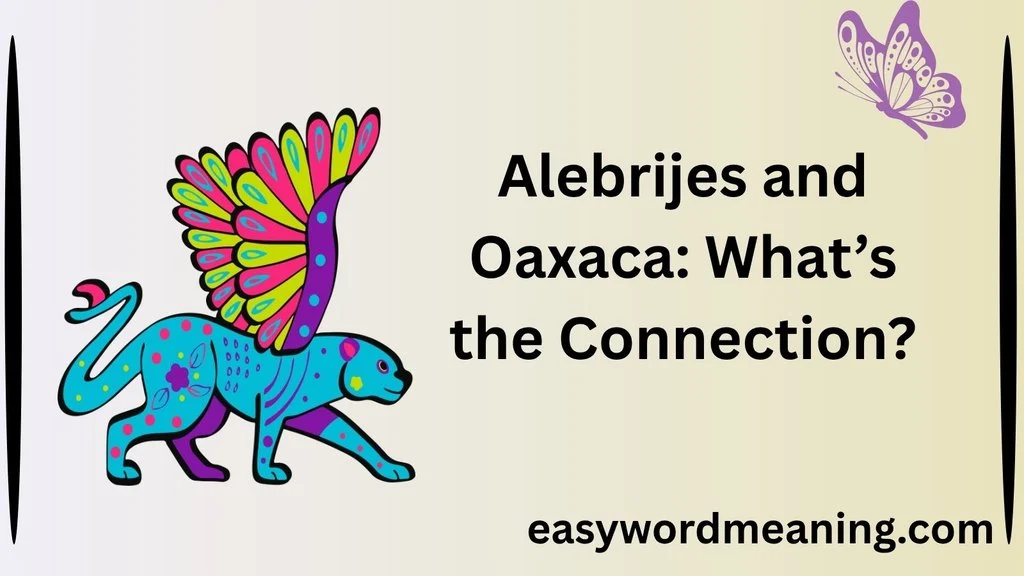
This is an important part of understanding the term because Oaxaca has developed its own famous alebrije tradition, particularly involving carved wooden figures.
Communities including San Antonio Arrazola and San Martín Tilcajete are internationally recognized for their wood-carved alebrijes and related traditions.
The history is slightly more complicated than saying that all alebrijes originated as Oaxacan wooden sculptures. The original alebrijes associated with Pedro Linares were created through cartonería in Mexico City, while Oaxacan artisans later developed highly distinctive traditions of carved wooden fantastical figures.
The Mexican government has specifically documented the importance of Oaxacan alebrijes, tonas, nahuales, and wood carvings as an important regional craft tradition.
Wooden Alebrijes
Oaxacan wooden alebrijes are often carved from copal wood and then painted with elaborate designs. Government sources describe copal as a commonly used wood for these traditional carvings.
The result is a handmade sculpture that can take the form of an animal, a fantastical creature, or a combination of different beings.
This is why you may see “Oaxacan alebrijes” used as a related search term.
How Is “Alebrijes” Used Online?
Although alebrijes isn’t texting slang, the word can appear frequently online because of social media, art, tourism, cultural education, photography, and entertainment.
You might encounter it in:
- Instagram captions
- TikTok videos
- Pinterest posts
- Travel blogs
- Museum posts
- Art discussions
- Mexican culture articles
- Online marketplaces
- Educational content
- Comments about colorful artwork
For example, someone might post a photograph of a brightly painted wooden creature and write:
“Look at these beautiful alebrijes!”
In this context, they are simply referring to the artworks.
Example 1: Social Media
Person A: “What are those colorful animal sculptures?”
Person B: “They’re alebrijes from Mexico.”
Here, “alebrijes” identifies the type of artwork.
Example 2: Travel Post
Caption: “Exploring Oaxaca and discovering incredible alebrijes.”
The person is talking about Mexican/Oaxacan craft and culture, not using a texting abbreviation.
Example 3: Art Discussion
Person A: “I love the colors in this sculpture.”
Person B: “It reminds me of an alebrije.”
In this case, the comparison highlights the sculpture’s fantastical and colorful appearance.
Example 4: Casual Online Conversation
Friend 1: “I drew a cat with wings, horns, and a snake tail.”
Friend 2: “That looks like an alebrije 😂.”
This would be an informal comparison to a fantastical animal design.
What Does “Alebrije” Mean in the Singular?
The singular form is alebrije.
The plural is alebrijes.
So:
- One: an alebrije
- More than one: alebrijes
For example:
Singular: “That colorful creature is an alebrije.”
Plural: “The museum displayed several alebrijes.”
This distinction is useful if you are writing about Mexican art or discussing the figures online.
Common Misunderstandings About Alebrijes
Because the word is unfamiliar to many English speakers, several misunderstandings can occur.
1. Thinking It Is Texting Slang
The biggest mistake is assuming that alebrijes is an internet abbreviation simply because you encountered it online.
It isn’t.
The word has a cultural and artistic history that predates modern social media by many decades.
2. Assuming Every Alebrije Is the Same
There is no single appearance that every alebrije must have.
The whole idea centers on imagination and unusual combinations of forms. Different artists can create very different creatures.
3. Saying Alebrijes Are Simply “Mexican Animals”
That’s an oversimplification.
Alebrijes are fantastical artistic figures, often combining characteristics of multiple animals rather than representing ordinary animals found in Mexico.
4. Confusing All Alebrijes With Oaxacan Wood Carvings
Oaxacan wooden alebrijes are extremely famous, but the history of the term is also connected to Pedro Linares and cartonería in Mexico City.
So it is more accurate to recognize both traditions when explaining the term.
5. Assuming the Word Has One Universal Symbolic Meaning
Individual alebrijes can have specific symbolism depending on the artist, community, design, and tradition.
For example, an Oaxacan artist may incorporate animals or symbols connected to local cultural ideas. A government-published example describes a particular “Lobo Alado,” combining a wolf and eagle, with symbolic meanings associated with cooperation, protection, perspective, and hope.
That means you shouldn’t automatically assign the same meaning to every alebrije.
Do Alebrijes Have Spiritual or Cultural Meanings?
This question has a more nuanced answer.
Some Oaxacan artistic traditions connect animal figures with Indigenous concepts and local worldviews. Official Oaxaca sources discuss tonas and nahuales as animals associated with protective or guiding roles in Zapotec cosmology.
However, it would be inaccurate to say that every alebrije has exactly the same spiritual meaning.
An individual piece can have its own story, symbolism, or inspiration. The artist may choose particular animals because of their characteristics, cultural associations, personal experiences, or artistic preferences.
Related Words and Terms
If you’re researching alebrijes meaning, you may also come across these related terms:
Alebrije
The singular form of alebrijes.
Cartonería
A traditional Mexican craft technique involving paper and related materials. Pedro Linares’s original alebrijes are associated with cartonería.
Oaxaca
A Mexican state strongly associated with contemporary wooden alebrije traditions.
Copal Wood
A type of wood commonly used for traditional Oaxacan carvings.
Tona
A term appearing in Oaxacan traditions involving animal representations and symbolism.
Nahual
A concept with Indigenous Mexican cultural and spiritual associations. Its meaning can vary depending on the specific cultural tradition, so it should not be treated as simply another word for “alebrije.”
Frequently Asked Questions:
What does “alebrijes” mean in English?
Alebrijes refers to fantastical Mexican art figures, often depicting imaginative creatures made by combining features of different animals. The term is not normally translated into one simple English word.
Is alebrijes a Spanish word?
Yes. Alebrije is a Spanish-language term, while alebrijes is its plural form.
Is alebrijes slang?
No. Alebrijes is not modern texting slang or an abbreviation. It is a culturally significant term associated with Mexican folk and popular art.
Where did alebrijes originate?
The original alebrije tradition is attributed to Mexican artist Pedro Linares, who created fantastical figures through cartonería after a vivid dream, according to the traditional account preserved by Mexico City’s Museo de Arte Popular.
Why are alebrijes so colorful?
Bright colors and intricate patterns are characteristic of many alebrijes. In Oaxacan wooden traditions, artisans carefully carve and hand-paint the figures using elaborate decorative designs.
Are alebrijes from Oaxaca?
Oaxaca is strongly associated with wood-carved alebrijes, particularly in communities such as San Antonio Arrazola and San Martín Tilcajete. However, the original alebrijes associated with Pedro Linares were created in Mexico City through cartonería.
Can an alebrije be any animal?
An alebrije can be highly imaginative and may combine characteristics from multiple real or imaginary animals. There isn’t one fixed animal that defines an alebrije.
Final Thoughts:
The alebrijes meaning is rooted in Mexican art and cultural tradition, not texting slang. Alebrijes are fantastical figures associated with imaginative animal combinations, vivid colors, and detailed craftsmanship.
The original tradition is attributed to Pedro Linares, while Oaxaca has developed a world-famous tradition of carved wooden alebrijes.
So, the next time you see “alebrijes” in a social media post, travel article, or art conversation, you’ll know that it refers to much more than a colorful creature. It represents a fascinating intersection of imagination, craftsmanship, Mexican cultural heritage, and evolving artistic traditions.
Share your favorite text abbreviation in the comments—and if you’ve ever seen an alebrije in person, tell us what it looked like!

Suleman Malik is the voice behind EasyWord Meaning, bringing clarity to words one meaning at a time. Passionate about language and learning, he makes understanding words simple, fun, and memorable for everyone.