In today’s nonstop texting, comment sections, and online debates, knowing the agree to disagree meaning can save friendships, end arguments politely, and keep chats drama-free.
This phrase pops up everywhere—from WhatsApp and Instagram to Reddit and X—and it’s often used to shut down debates without being rude.
This guide is Updated for 2026 and written in simple, human language.
Whether you’ve seen it in a heated group chat or want to use it correctly yourself, this article breaks everything down clearly—with real-life examples, common mistakes, and modern slang context.
What Does “Agree to Disagree” Mean? 🤔
(Definition & Origin)
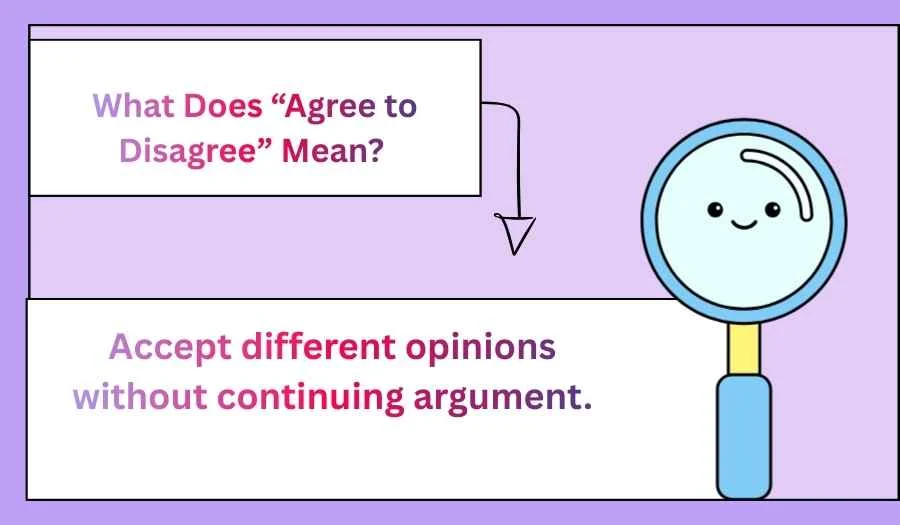
Agree to disagree means that two or more people accept they have different opinions and choose to stop arguing about it—without forcing agreement.
In plain English:
“We don’t think the same, and that’s okay.”
*Simple Definition
- It’s a polite way to end a disagreement
- It shows mutual respect, even when opinions clash
- It avoids turning a discussion into a fight
Where Did It Come From?
The phrase dates back to the 18th century and is often linked to philosophers and scholars who valued respectful debate. Over time, it moved from formal discussions into everyday speech—and now, straight into texts, comments, and DMs 📱.
Today, the agree to disagree meaning in chat is more casual and sometimes even a little sarcastic, depending on context.
How to Use “Agree to Disagree” in Texts or Chat 💬
Using this phrase correctly is all about tone and timing.
When It’s Perfect to Use
Use agree to disagree when:
- A conversation is going in circles 🔄
- Opinions are personal (politics, music, lifestyle)
- You want peace, not victory ✌️
Common Chat Situations
You’ll often see it used on:
- WhatsApp & Messenger
- Instagram comments
- Facebook debates
- Reddit threads
- X (Twitter) replies
- Discord servers
Texting Examples
- “We’re not gonna see eye to eye, so let’s agree to disagree.”
- “Fair point, but I still feel differently—agree to disagree 😊”
- “Okay, agree to disagree and move on.”
💡 Pro tip: Adding emojis like 🤝🙂 softens the message and makes it feel friendly instead of cold.
Examples of “Agree to Disagree” in Conversations 🗨️
Let’s look at realistic, relatable examples so you can recognize and use it naturally.
Example 1: Friendly Debate
A: “This movie was boring.”
B: “Really? I loved it.”
A: “Guess we’ll have to agree to disagree 🤝”
👉 Meaning: No hard feelings, just different tastes.
Example 2: Family Group Chat
Mom: “Everyone should wake up early.”
You: “Night people exist 😅”
Mom: “Agree to disagree.”
👉 Meaning: Topic closed. Respect maintained.
Example 3: Online Argument
User1: “Android is better than iPhone.”
User2: “Nah, iPhone wins.”
User1: “Alright, agree to disagree.”
👉 Meaning: Let’s stop before this turns toxic.
The Emotional Meaning Behind “Agree to Disagree” ❤️
Beyond the literal definition, the agree to disagree meaning also carries emotional signals.
It can mean:
- “I respect your opinion”
- “This argument isn’t worth hurting our relationship”
- “Let’s keep things civil”
However, tone matters a LOT.
Friendly vs Passive-Aggressive Use
- ✅ Friendly: “Agree to disagree 😊”
- ⚠️ Passive-aggressive: “Whatever. Agree to disagree.”
Same words. Very different vibes.
Common Mistakes or Misunderstandings 🚫
Even simple phrases can go wrong if used incorrectly.
Mistake 1: Using It Too Early
Ending a discussion too fast can feel dismissive.
- ❌ “Agree to disagree” after one reply
- ✅ Use it after opinions are clearly shared
Mistake 2: Using It Sarcastically
Sarcasm can make it sound rude.
- ❌ “Yeah yeah, agree to disagree 🙄”
- ✅ Keep emojis neutral or positive
Mistake 3: Thinking It Means Agreement
Important clarification:
- It does NOT mean you agree
- It means you accept the difference
Is “Agree to Disagree” Formal or Informal? 🧠
The beauty of this phrase is its flexibility.
Formal Use
- Workplace discussions
- Emails (carefully)
- Professional debates
Example:
“We seem to have different perspectives, so we’ll agree to disagree and move forward.”
Informal Use
- Texting friends
- Social media comments
- Casual chats
Example:
“Lol okay, agree to disagree 😂”
Related Slangs or Abbreviations 🔗
If you’re into chat slang, here are similar expressions you might see online:
- Let’s drop it – Stop discussing
- Fair enough – Acknowledge without agreeing
- To each their own – Everyone has preferences
- IMO (In My Opinion)
- IDK (I Don’t Know)
- SMH (Shaking My Head)
💡 Internal linking tip: You can link this article to guides on “fair enough meaning in chat” or “to each their own slang meaning.”
How Gen Z & Millennials Use It in 2026 📲
In 2026, the phrase is still alive—but often shortened or stylized.
Modern Variations
- “Agree to disagree 🤝”
- “Let’s just agree to disagree”
- “We’ll agree to disagree lol”
It’s also common in:
- Comment section debates
- Reaction memes
- Screenshot-worthy chats
Sometimes it’s genuine. Sometimes it’s a polite way of saying “I’m done here.”
When NOT to Use “Agree to Disagree” ❌
Despite being polite, it’s not always the best choice.
Avoid it when:
- Facts are clearly wrong (misinformation)
- Someone is being harmful or abusive
- A serious issue needs resolution
In those cases, clarification or boundaries work better.
Quick Summary: Agree to Disagree Meaning ✅
Let’s wrap it up simply:
- Agree to disagree means accepting different opinions peacefully
- It’s widely used in texts, chats, and social media
- Tone and timing matter more than the words
- It helps keep conversations respectful and drama-free
Used correctly, it’s one of the most emotionally intelligent phrases in modern communication 🤝.
Final Thoughts :💭
Understanding the agree to disagree meaning helps you communicate smarter, not louder. In a world full of hot takes and online arguments, knowing when to step back is a power move.
This guide was updated for 2026, with fresh examples and modern chat culture in mind.
👉 Share your favorite text abbreviation in the comments!

Hi, I’m Musaghumman, the mind behind EasyWordMeaning. I turn confusing words into easy meanings so anyone can learn, understand, and use English with confidence.