Understanding “abdication” is super important, not just in history class 🏰 but even in modern online chats and social discussions.
You might see someone jokingly say a friend “abdicated” their responsibilities 😅, and knowing the right meaning helps you understand both serious and funny contexts.
Let’s break it down in simple, chat-friendly language so you never get confused again!
What Does “Abdication” Mean? (Definition & Origin) 📜
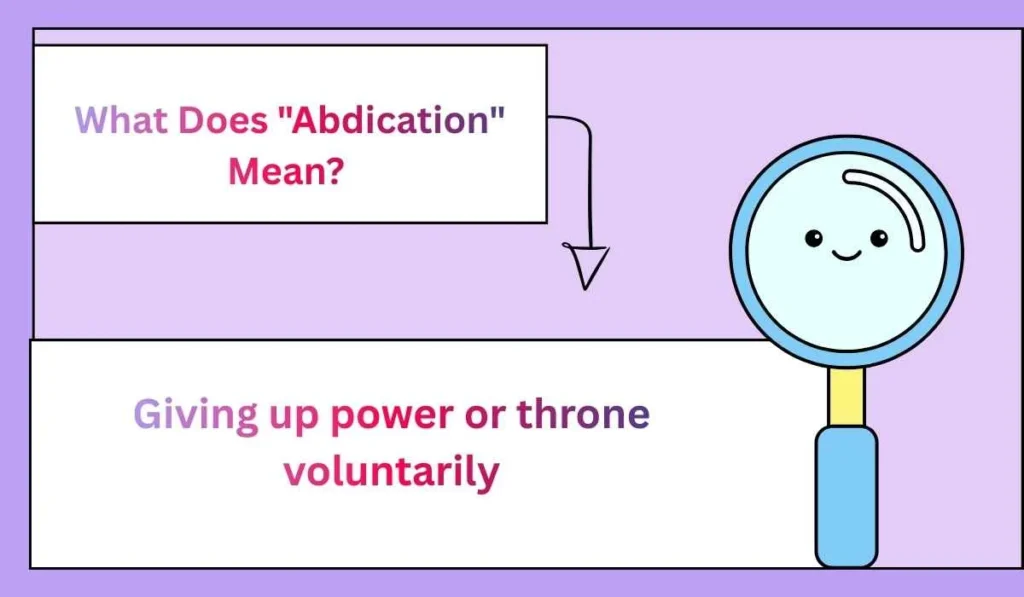
Abdication literally means stepping down from a position of power or responsibility, often voluntarily. Historically, it’s used for kings, queens, or leaders who give up their throne.
Origin:
- Comes from the Latin word “abdicare”, meaning to renounce or reject.
- Commonly used in history books: e.g., King Edward VIII of England abdicated the throne in 1936.
In texting or social media, “abdication” is sometimes used humorously when someone avoids responsibility:
- Example: “I totally abdicated my chores today 😂”
Key takeaway: Abdication = quitting a role, giving up responsibility, stepping down gracefully. ✅
How to Use “Abdication” in Texts or Chat 💬
While it’s a formal word, it’s slowly creeping into casual online conversations. Here’s how you can use it naturally:
- Work/Responsibility Context:
- “I abdicated the group project leadership, lol 😅”
- Funny or Sarcastic Context:
- “He abdicated his duties of making breakfast 😭”
- Historical or Formal Context:
- “The king’s abdication changed history forever 👑”
Tip: Pair it with emojis to make it more relatable in chat. People rarely text only “abdicated”—adding a laugh, crown, or shrug emoji makes it feel casual.
Examples of “Abdication” in Conversations 📱
Here are some real-life-style examples of how people might use it in chat or on social media:
- Text with friends:
Friend 1: “You didn’t do your part for the party?”
Friend 2: “Yeah, I abdicated my duties 😬” - Social media post:
“Modern adults be like: abdication of adulting every weekend 😎🍕” - Forum post (funny/historic reference):
“Edward VIII’s abdication is the ultimate tea spill 🍵👑”
Notice how the word adds a playful or dramatic twist to simple situations.
Common Mistakes or Misunderstandings ⚠️
People sometimes confuse abdication with:
- Resignation: Usually a job-related quitting. Abdication often implies official or formal authority.
- Abandonment: Leaving something irresponsibly. Abdication doesn’t have a negative moral judgment—it’s more neutral or formal.
Quick tip: If you’re texting casually, you can still say “abdicated my responsibilities” and people will get the humor. But don’t use it for leaving a relationship or ghosting—wrong context! 😅
Related Slangs or Abbreviations 🔗
Although abdication isn’t a common internet abbreviation, it pairs with modern slang like:
- Ghosted 👻: Avoiding responsibility or contact.
- Checked out 😴: Mentally abdicated your duties.
- Adulting fail 😬: Fun way to say you gave up responsibilities temporarily.
Example in chat:
“I totally abdicated my adulting today 😎🍕 #CheckedOut”
Why Knowing “Abdication” is Useful in 2026 🌐
- People increasingly use formal words humorously in texts and social media.
- Makes you sound witty and informed when chatting or posting online.
- Helps avoid misunderstandings in memes, historical discussions, and forums.
Updated for 2026: The word is trending in humorous adulting posts, political memes, and even gaming chats when someone “abdicates leadership” in team games 🎮👑.
Conclusion: ✨
To sum up:
- Abdication = giving up responsibility or power, voluntarily.
- Works in both formal (history, politics) and casual (text, memes) contexts.
- Use it creatively in chats with emojis to show humor or sarcasm.
So next time you bail on chores or a Zoom meeting, just say you “abdicated your duties 😎👑”—it’s accurate AND funny!
Share your favorite text abbreviation in the comments! 💬👇

Suleman Malik is the voice behind EasyWord Meaning, bringing clarity to words one meaning at a time. Passionate about language and learning, he makes understanding words simple, fun, and memorable for everyone.